


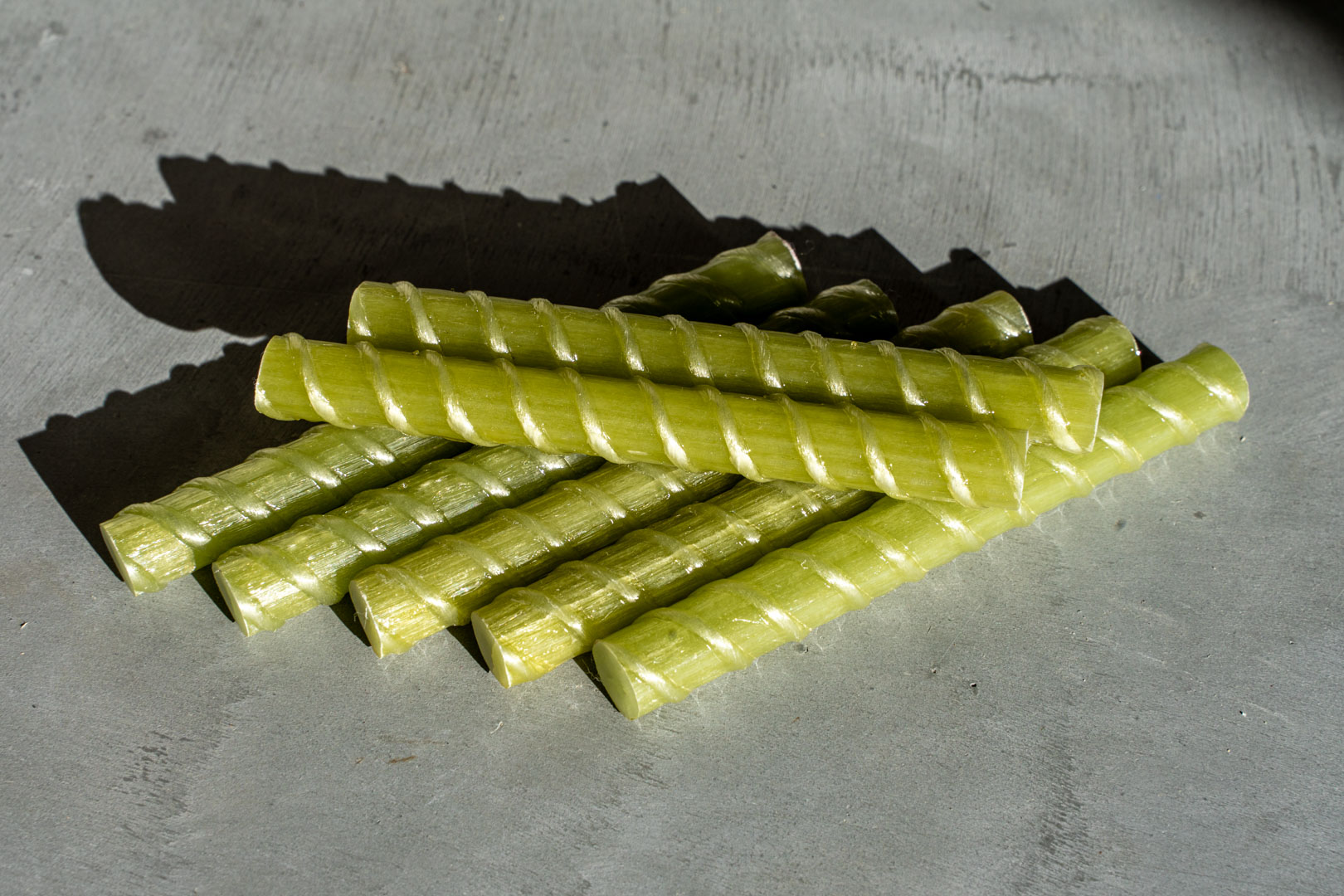
In contemporary construction, rebar plays a pivotal role as the foundational element of concrete structures globally. Its primary purpose is to augment concrete’s intrinsic compressive strength with enhanced tensile resilience, thus addressing its vulnerability to tension forces. The incorporation of either steel or Glass Fiber Reinforced Polymer (GFRP) rebar into concrete significantly elevates its tensile capacity. This advancement facilitates the erection of structures that are not merely architecturally sound but also exhibit heightened durability against environmental challenges, significantly enhanced by replacing steel with GFRP bar for superior corrosion resistance. Such strategic use of rebar has catalyzed a transformative shift within the construction sector, enabling the realization of previously unattainable architectural visions, fostering innovation, and fortifying infrastructure resilience.
Tracing the evolution of rebar utilization in construction reveals a trajectory of significant technological progress spanning over a century. Initially, the introduction of steel rebar represented a groundbreaking approach to reinforcing concrete edifices, enhancing their tensile integrity to match their inherent compressive strength. This amalgamation of steel with concrete set a new paradigm, propelling the construction of monumental skyscrapers, expansive bridges, and comprehensive infrastructure networks.
However, as the 20th century waned, the industry’s quest for alternatives capable of circumventing the inherent drawbacks of steel, notably its proneness to corrosion, gained momentum. This pursuit culminated in the adoption of Fiberglass Reinforced Polymer (FRP) rebar, including its subtype, GFRP. Characterized by its resistance to corrosion, reduced weight, and superior tensile strength, FRP bar emerged as a formidable counterpart to traditional steel, despite its initially higher cost.
This article aims to dissect the distinct attributes, applications, and intrinsic values of each rebar type within the ambit of modern construction methodologies.
Material Technical Analysis
When comparing fiber glass rebar and steel rod, a deep understanding of their fundamental properties is crucial. These properties not only determine the suitability of each rebar type for specific application conditions but also their performance over the lifespan of a construction project.
Glass Fiber Reinforced Rebar: Composition and Manufacturing
Fiber glass bar is composed of a polymer matrix reinforced with glass fibers. The typical polymer used is a vinyl ester or epoxy resin, providing the base for the composite’s structural integrity and resistance to environmental factors. Fiberglass rebar, acting as the reinforcement within the polymer matrix, confer high tensile strength and stiffness to the rebar.
The manufacturing process involves pulling the glass fibers through a resin bath, where they are thoroughly coated with the polymer material before being pulled through a shaping die. Once shaped, the composite material is cured, either at room temperature or through the application of heat, solidifying the resin and locking the fibers in place.
Table 1: Comparative Properties of GFRP and Reinforcing Steel Bar
Property of fiberglass rebar and steel reinforced concrete | GFRP | Steel |
Tensile Strength (MPa) | >1000 | 450 |
Modulus of Elasticity (GPa) | >60 years, a potential lifespan of structures using corrosion-resistant steel bar | 190 to 200 |
Density (kg/m³) | 2100 | 7800 |
Corrosion Resistance | High corrosion-proof quality | Low |
Thermal Conductivity | Low | High |
Steel Rebar: Composition and Manufacturing
Steel rod is predominantly made from carbon steel and is available in various grades that determine its yield strength. The manufacturing process involves the hot rolling of steel billets in a mill, which are then twisted or deformed to provide the necessary mechanical bond with concrete. The primary chemical composition of rebar steel includes iron (Fe) with a small percentage of carbon (C) to improve its strength and fracture resistance. Additional elements like manganese (Mn), silicon (Si), and sometimes chromium (Cr) and nickel (Ni) are added to enhance specific properties such as toughness and rust resistance, important considerations in the shift from steel to GFRP bar reinforcement in corrosive environments.Strengthening Mechanisms
- The strength of GFRP rebar is derived from the glass fibers’ high tensile strength, with the polymer matrix protecting the fibers and distributing loads among them, making it an ideal choice for reinforcement ratio adjustments in concrete beams. This composite action allows fiber glass rebar to maintain strength while being lightweight and resistant to corrosion.
- Steel Rebar: The strength of steel reinforcement comes from its inherent material properties and the deformation patterns rolled into its surface, providing a mechanical bond with concrete. Steel’s high modulus of elasticity makes it an ideal reinforcement for maintaining structural rigidity.
Comparative Analysis of GFRP and Steel Rebar in Construction
The construction industry’s relentless quest for more resilient, cost-effective, and sustainable building materials has led to significant advancements in reinforcing technologies. Among these, fiberglass rebar and steel rebar stand out for their unique properties and contributions to modern construction practices.Advantages of glass fiber reinforced polymer Rebar
Composite rebar, with its composite of glass fibers and resin, offers several compelling advantages over traditional reinforcing bar:- Corrosion Resistance: GFRP’s inherent resistance to corrosion extends the lifespan of concrete structures, especially in corrosive environments such as coastal regions.
- High Tensile Strength: The glass fibers within GFRP provide high tensile strength, which is crucial for the structural integrity of buildings.
- Lightweight: fiber glass rebar is significantly lighter than steel, reducing transportation and handling costs.
- Non-Conductive: Its non-conductive nature makes GFRP ideal for structures requiring electromagnetic neutrality.
- Durability: The longevity of GFRP, free from corrosion-related degradation, translates into lower long-term maintenance costs. Table 2: Composite Rebar Advantages
| Feature | Benefit |
| Corrosion Resistance | Extends structural lifespan, ideal for corrosive environments |
| High Tensile Strength | Enhances structural integrity, particularly through the use of GFRP bars which improve the shear strength and flexural capacity of concrete elements. |
| Lightweight | Reduces logistical costs, especially when GFRP bars are used to replace steel in reinforced concrete structures, due to their lighter weight and ease of handling. |
| Non-Conductive | Suitable for electromagnetically sensitive structures |
| Durability | Lowers maintenance and replacement costs |
Disadvantages of Composite Rebar
Despite its advantages, composite rebar is not without its some limitations:
- Lower Elastic Modulus: Compared to steel, GFRP has a lower modulus of elasticity, potentially affecting the rigidity of structures.
- On-Site Handling: Special equipment is required for cutting and bending FRP rebar on site, complicating the construction process.
Advantages of Steel Rebar
Steel rebar has been the backbone of construction reinforcement due to its robust properties:
- High Strength and Rigidity: Steel’s high modulus of elasticity provides essential support and rigidity to concrete structures.
- Thermal Conductivity: a factor affecting steel reinforced and FRP bars Its ability to conduct heat can be beneficial in certain construction applications.
- Recyclability: Steel rod’s high recyclability aligns with sustainable construction practices.
Table 3: Steel Rebar Advantages
Feature | Benefit |
High Strength and Rigidity | Ensures structural support and rigidity, critical in steel reinforced concrete designs |
Thermal Conductivity | Facilitates temperature management within structures |
Recyclability | Supports environmental sustainability |
Disadvantages of Steel Rebar
The use of reinforcing steel bar is challenged by several drawbacks:
- Corrosion: Steel’s susceptibility to corrosion can lead to significant structural degradation.
- Maintenance Costs: Protective treatments are required to mitigate corrosion, increasing the total cost of ownership.

Innovations and Trends in Composite Materials
The realm of construction materials has witnessed substantial progress, particularly in the domain of composite reinforcements, with Glass Fiber Reinforced Polymer rebar emerging as a significant innovator. Scholarly investigations and technological advancements in polymer science have collectively amplified the capabilities of composite rebar. These developments in steel reinforced concrete and FRP bars have augmented its mechanical strength, endurance, and adaptability, positioning it as a versatile solution across diverse construction scenarios.
Looking towards the horizon, the trajectory of the rebar market is set to be significantly influenced by GFRP rebar, especially within the ambit of eco-conscious construction methodologies. The drive towards sustainable material selection and the imperative for enduring infrastructural solutions underscore the rising prominence of GFRP rebar. This trend is further reinforced by the global mandate to diminish the construction sector’s ecological footprint, propelling the demand for green alternatives like FRP rebar.
The ongoing exploration and assimilation of GFRP rebar within construction paradigms herald a paradigmatic shift towards more innovative, resilient, and sustainable building practices. This transition marks a pivotal chapter in the narrative of rebar market evolution, charting the course towards a future where composite materials redefine the benchmarks of construction excellence.
When considering composite rebar for your next construction project, it’s crucial to choose a reliable supplier that offers high-quality materials and effective support. By opting for Rebarmat, you gain access to advanced solutions in composite rebar technology. Specializing in Glass Fiber Reinforced Polymer (GFRP) rebar, Rebarmat is renowned for its corrosion resistance, strength, and lightweight properties.
Provide us with some basic details about your project, and we will assist you in designing a solution tailored to your needs within just a few days. Learn more about the benefits of GFRP rebar from Rebarmat by contacting our Sales & Technical Team. We are eager to discuss the advantages of our products and how they can contribute to the success of your next project.
